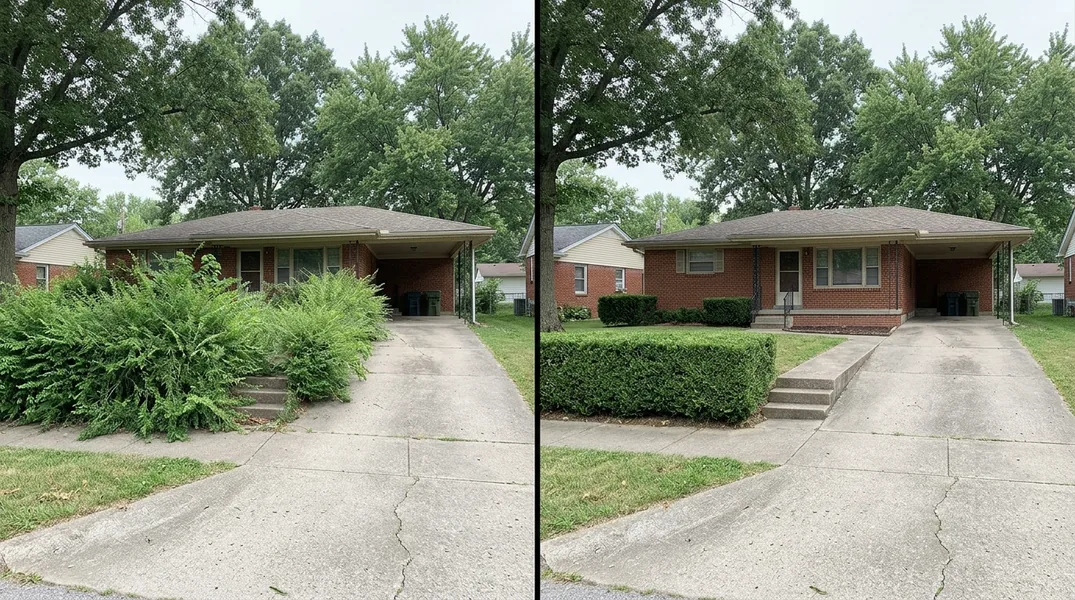
Understanding the Difference: Tree Trimming vs Tree Removal
When you notice a problem with a tree in your yard, the first question that comes to mind is usually simple: do I need to remove it, or can it be saved? The answer depends on several factors, and understanding the difference between Tree Trimming & Pruning and Tree Removal is the first step toward making the right decision for your property.
Tree Trimming & Pruning is a preservation strategy. It involves removing dead, diseased, or overgrown branches to improve the tree's health, appearance, and safety. When done correctly, trimming encourages new growth, improves air circulation through the canopy, and reduces the risk of branch failure. Many trees that appear unhealthy or problematic can actually be restored to full vitality with professional pruning. In contrast, Tree Removal is a last resort. It's necessary when a tree is beyond saving, poses an immediate hazard to your home or family, or is already dead.
Signs Your Tree Can Be Saved with Professional Trimming
Not every tree with visible problems needs to come down. Many Evansville homeowners are surprised to learn that their trees can be restored to health through expert care. If your tree is showing signs of stress but still has a strong main trunk, living branches, and green foliage in multiple areas of the canopy, there's a good chance it can be saved. Trees that have experienced storm damage, overcrowding from neighboring trees, or poor previous pruning often respond beautifully to professional intervention.
One of the most common reasons homeowners think they need removal is excessive growth or branches that have grown too close to the house or power lines. In these cases, strategic Tree Trimming & Pruning can solve the problem entirely. If your tree has dead wood only in certain sections, or if disease is limited to specific branches rather than spread throughout the entire tree, pruning away the affected areas often allows the tree to compartmentalize the damage and continue thriving. A tree that's been neglected for years and has become overgrown can frequently be brought back into shape and made safe again through patient, professional pruning over one or two seasons.
Hazard Tree Assessment in Evansville: When Removal Becomes Necessary
Sometimes, no amount of trimming will save a tree. A professional hazard tree assessment is the best way to determine whether your tree has crossed the line from salvageable to dangerous. During a hazard tree assessment in Evansville, an arborist evaluates the tree's structural integrity, the presence of disease or pest damage, the tree's proximity to structures and people, and the likelihood of failure. Trees with deep cavities in the trunk, significant lean, major cracks or splits, or extensive deadwood throughout the canopy are often candidates for removal.
Disease plays a major role in removal decisions. If a tree has been diagnosed with a disease like Dutch elm disease, emerald ash borer infestation, or oak wilt that cannot be arrested, removal may be the most responsible choice for your property and your neighbors' trees. Similarly, trees that are dying from root damage, soil compaction, or environmental stress may not recover even with the best care. A tree that has already lost more than 50 percent of its living crown, or one with a severely compromised root system, is unlikely to survive long term. In these situations, Tree Removal protects your family and prevents future problems.
Red Flags That Indicate Your Tree Needs to Come Down
Certain warning signs are clear indicators that your tree should be removed rather than trimmed. If you notice the tree is leaning significantly (beyond a slight natural lean), or if it has developed a sudden new lean after a storm, the root system may be compromised. Trees with large hollow sections in the trunk, bark that is peeling away in large strips, or multiple major branches that are completely dead are typically beyond saving. If you see fungal fruiting bodies (mushrooms or shelf fungi) growing from the trunk, this usually indicates internal decay that has progressed too far for pruning to help.
Pay attention to the tree's overall structure and vitality. If branches are breaking off regularly without storms, if the canopy is so thin that you can see through most of it, or if the tree has stopped leafing out in spring, these are signs of serious decline. Trees that have been topped (cut flat across the top) often develop multiple weak branches and structural problems that make them hazardous long term. Additionally, if a tree is growing too close to your foundation, septic system, or power lines and cannot be safely trimmed back far enough to solve the problem, removal may be the only practical solution. When in doubt, a professional hazard tree assessment can provide clarity and peace of mind.
The Cost Factor: Tree Trimming vs Removal Pricing
One of the practical considerations in the trimming versus removal decision is cost. Generally speaking, professional Tree Trimming & Pruning is significantly less expensive than Tree Removal, which makes it the preferred option when the tree can be saved. Trimming typically ranges from a few hundred dollars for smaller trees to several thousand for large, complex jobs. Tree Removal, on the other hand, involves felling the tree, cutting it into sections, removing the debris, and often includes Stump Grinding to remove what's left behind, all of which adds to the total expense.
However, it's important to view this decision through a longer lens than just immediate cost. Investing in professional trimming now can extend a tree's life by decades and save you from the much larger expense of removal later. Conversely, holding onto a hazardous tree to avoid removal costs could result in property damage, personal injury, or expensive emergency repairs. The best approach is to get a professional assessment and free estimate from a qualified arborist. They can explain the pricing for your specific situation and help you understand whether trimming or removal makes the most sense for your tree and your budget.
What to Do Next: Getting a Professional Assessment
If you're uncertain about whether your tree should be trimmed or removed, the best next step is to schedule a professional hazard tree assessment. An experienced arborist can examine your tree in person, discuss your concerns, and provide a clear recommendation based on the tree's condition and your property's specific circumstances. Don't rely on guesswork or advice from well-meaning neighbors. Trees are valuable assets that deserve expert evaluation, and the cost of a professional assessment is minimal compared to the cost of making the wrong decision.
Evansville Tree Service has been helping homeowners in Evansville and the surrounding areas make informed decisions about their trees for years. Whether your tree can be saved through expert trimming or needs to be safely removed, our team has the knowledge and equipment to help. Call us today at (930) 212-4965 to schedule your free estimate, or visit our website at https://evansville-tree-service.com to learn more about our services. Let's work together to keep your property safe and your trees healthy.
Looking for a professional tree service contractor in Evansville? Evansville Tree Service responds fast for all your tree service needs.
Get a Free QuoteOur services: Tree Removal · Tree Trimming & Pruning · Stump Grinding